Meetings don't have to suck
Meetings are an opportunity to have effective communication between team members. So where do things go wrong?

We have all been through this phase lately where the number of meetings being added to our calendars has increased. Some of us are still working remotely and having long tiring communications throughout the day. But this is not what meetings are supposed to be.
Let's define how an ideal (almost utopian) process should look like to get the most out of our meetings without being mentally drained by them.
This is Part 1 where we talk about the meeting invite. A good meeting invite is the corporate analogy of well begun is half done.
The Set Up
The most common way of setting up meetings is to send an email which blocks time in the calendar and informs the invited people about it. We should take care of a few steps to make this email useful.
The objective
The email must have an objective statement. What are we trying to achieve through this meeting?
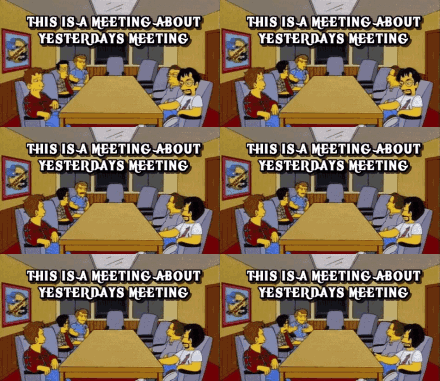
A few examples of meeting objectives:
- An action plan for the day or to solve a problem.
- Brainstorming for the next feature.
- Backlog prioritization or sprint planning.
- Status updates (sucks the most, by unanimous decision).
- Knowledge transfer.
- Clarification calls, like a screen-sharing session.
When you put an objective statement in your email, it sets the tone for the invitees.
- It makes them understand what you are trying to achieve and they will know what to bring to the table.
- They may point out that there could be other people you may want to include to achieve this objective.
- They may point out that there are people who could have been left out.(it isn't as bad as it sounds, this is the kind of being left out we need)
The Agenda
This is the most important part of the invitation. This is the essential detail which makes your meeting look purposeful and important.
What should it include?
- The items to be discussed - with a one liner detail about them.
- The priority of the items - it may be ok to leave out low priority items at the end of the meeting for the sake of time or readiness. The agenda may not be met completely
- The type of each item -
- Is it an information being handed out?
- Is it something which will require in depth discussion?
- Are we just going to define next steps and assignees?
- The time allotted for each item - this is quite an expert level process. It won't be easy to reach but it should be aimed for. If this is followed well, it means that most meetings cannot run out of time and do not miss out on agenda items.
Sending out an agenda will give the invitees time to think about each item and will set expectations from them. They will not come to the meeting with a blank mind expecting to be surprised.
If you cannot define an agenda in written, you are not ready to occupy everyone's time yet.
The preparation
Apart from setting the context and the agenda, it is important to let people know if there are any preparations they need to do to be ready before the meeting. For e.g.
We are going to discuss "Feature X" which we have been working on and would like to include perspectives of a few more people who were not aware of "Feature X". To get yourself accustomed to the topic, please go through
- the attached documents
- the JIRA ticket
- the designs located at this URI on our cloud storage
There could be more examples of this but this is the most common use case I go through regularly. This should give you an idea. Try to have as many people up to date with the knowledge required for your meeting.
The Timing
Nobody likes sudden meetings. Everyone is busy with their work and is following a plan. Imagine you are playing your favorite sport right now, would you like to help me with an urgent Math problem? More importantly, it does not make them effective in the meeting if they had no time to go over the agenda and develop some feedback or ideas of their own.
The least a team should do is plan one day ahead so that when we join in the morning, we are aware of our meeting schedule for the entire day and are able to plan the rest of our time effectively.
If the situation requires to create an urgent meeting during the day, make sure you give the invitees enough time to think about the topic before joining the meeting.
There are some other benefits of planning one day ahead:
- People may suggest a better time as per their availability.
- They get time to go through the preparations.
- They may invite other required people.
- They may suggest a change in agenda.
Remember.
The participants contribute more in the time they get to prepare for the meeting compared to the duration of the meeting.
Oh! I almost forgot about the duration. It will be proportional to the list of agenda items and the number of people involved. However, you have to consider the attention span of the people involved.
It really depends on how interesting the meeting is but usually meetings from 30-60 minutes is what should solve problems effectively without being a burden on people. Cut down the agenda or break down work into smaller teams so that nobody has to sit through long durations. Meeting time (just like all time) is money.
Keep in mind the above points the next time you set up a meeting. Apart from this, as a meeting leader/organizer, you are expected to have a well thought of reason to have the meeting and are responsible for its success.
In the next part, things get more interesting when we talk about the meeting process itself.
You can connect with me on Twitter


